
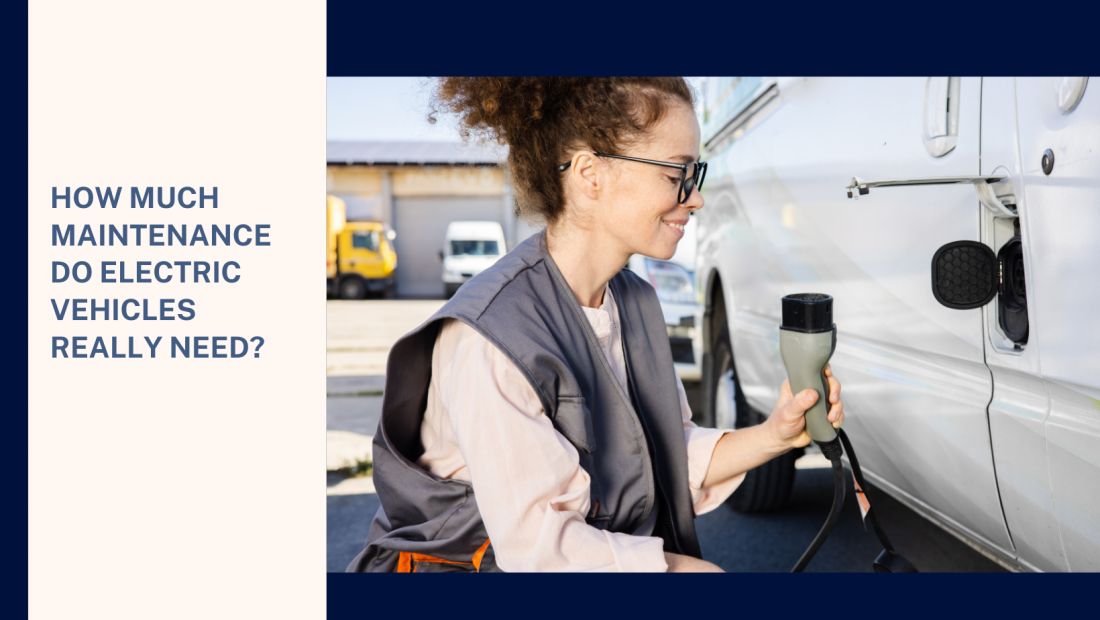
How Much Maintenance Do Electric Vehicles Really Need?
When looking at a van with your typical combustion engine you will see that is it comprised of hundreds of moving parts and you wouldn’t be wrong in thinking more moving parts = more problems. In comparison, electric vans will only hold minimal moving parts, which means less maintenance and lower risk of things going wrong.
The main complex components in an electrics van:
- High voltage relays
- High voltage air conditioning pumps
- High voltage inverters
Owning electric requires the standard regular maintenance of, tyres, brakes and wipers as well as replacing the timing belt or topping up engine oil.
Battery Maintenance
Any vehicle’s battery will need maintenance over time, however, traction batteries in electric vans have proven to be quite robust. Refer to the manufacturer’s recommendations in relation to charging and prolonging the life of a traction battery. Again, refer to the manual when charging your battery, typically it is recommended around 20%-80% full charge for efficiency. Also make sure you don’t let the battery completely run out.
Brake Maintenance
Electric vehicles use a combination of conventional and regenerative braking.
Regenerative Braking = converting the lost energy back into stored energy in the battery when the car slows down.
In electric vehicles braking tends to be more efficient, which puts less wear and tear on the braking system and leads to brake components that last longer and require less maintenance.
Again, just like any vehicle, you will need to have your brake discs, pads and other braking components checked to make sure they are in good working order.
Coolant Levels
Coolant is typically used to manage the temperature of the battery in electric vehicles. For the system to continue working properly you will need to flush the coolant or top it up – the frequency of doing this is dependent on the make and model of your vehicle. Check the owner’s manual for instruction and guidance however, a lot of electric vehicles have sealed cooling systems that should be checked and topped up by a qualified electric vehicle technician.
Tyre Maintenance
like a traditional vehicle, you will have to check and maintain the tyres on electric vehicles regularly. You may think that electric/manual tyres are indifferent but actually they are often very different. Electric tyres are designed to cope with more accelerating power and additional weight, they also tend to have less rolling resistance and are quieter on the road. Similar to a regular vehicle tyre maintenance is important, including replacing them, rotating in accordance with the owner’s manual and keeping tyre pressure topped up to the right level.
Repairs
As previously mentioned electric vehicles have fewer moving parts, they don’t need as much maintenance in comparison to a diesel or petrol vehicle and are usually more reliable. That’s not to forget although running costs of the vehicle would be kept down, you will need to keep in mind that the vehicle’s parts will need repairing when they go wrong from time to time. Most commonly electric vehicles have problems with the battery or punctures or similar trye problems. No different to a petrol/diesel you will need to get an MOT and servicing in order to keep your electric van running smoothly. Although, there is no emissions test and with fewer moving parts to inspect during the MOT, you are likely to pay less in comparison.
If you’re thinking of getting an electric van, you’ll be glad to hear that there’s less maintenance involved compared to a traditional vehicle. But it’s still important to know what maintenance your electric vehicle will need.